





2000W Inverter for Solar Systems: Compatibility and Tips
- Understanding inverter waveforms and why they matter for solar
- What is a modified sine wave and how it differs from pure sine
- Why waveform quality matters in solar installations
- When a modified sine wave is acceptable
- Sizing and compatibility: Can a 2000W inverter handle your solar loads?
- Interpreting continuous vs peak (surge) ratings
- Battery, PV array and charge controller pairings
- Load compatibility checklist
- Practical installation and operational tips
- Wire sizing, fusing and placement
- Cooling and derating in hot environments
- Managing harmonics, grounding and EMI
- Comparing 2000W modified sine vs pure sine inverters
- Cost, efficiency and practical tradeoffs
- Which devices will likely fail or behave poorly?
- Quick reference comparison table
- Real-world troubleshooting and optimization
- Common installation problems and fixes
- Testing appliances before deployment
- When to upgrade from modified to pure sine
- About Guangzhou Congsin — capabilities and relevance to your solar project
- Company background and product focus
- Manufacturing quality, certifications and innovation
- Product fit for a 2000W modified sine wave inverter requirement
- Standards, safety and verifiable data sources
- Standards and certifications to request
- Authoritative resources I use when specifying systems
- Performance metrics to verify
- FAQs
- Q1: Can a 2000 watt modified sine wave inverter run a refrigerator?
- Q2: Will my laptop charger work with a modified sine inverter?
- Q3: How should I size battery bank for continuous 2000 W output?
- Q4: Is a modified sine inverter safe for medical devices?
- Q5: How do I reduce EMI from a modified sine inverter?
- Q6: What maintenance does a 2000W inverter require?
I often get asked whether a 2000 watt modified sine wave inverter is a good match for a residential or mobile solar system. In this article I summarize practical compatibility considerations, device-level effects, installation and sizing tips, and troubleshooting steps you can apply right away. I draw on industry standards, manufacturer practice, and decades of inverter application experience to help you select and deploy a reliable solution that balances performance, cost, and safety.
Understanding inverter waveforms and why they matter for solar
What is a modified sine wave and how it differs from pure sine
A modified sine wave (often called modified square wave) is an approximation of a true sine wave produced by simpler inverter topologies. The Wikipedia page on modified sine wave provides a concise technical description and typical use cases: https://en.wikipedia.org/wiki/Modified_sine_wave. Pure sine wave inverters synthesize or approximate the sinusoidal AC waveform more accurately, which improves compatibility with sensitive electronics and reduces electromagnetic interference.
Why waveform quality matters in solar installations
Waveform quality affects how appliances perform: motors, audio/video equipment, variable-speed drives, and some chargers may run hotter, louder, or less efficiently on modified sine wave output. Power factor, harmonic distortion and THD (total harmonic distortion) are technical metrics; for general system design, I focus on compatibility lists and measured device behavior rather than arcane specs. The IEC/IEEE documents on power quality discuss these effects in more detail (see IEEE standards).
When a modified sine wave is acceptable
For resistive loads (heaters, incandescent bulbs), simple motors with low starting torque, and many power tools, a 2000 watt modified sine wave inverter can be a cost-effective option. I generally recommend testing specific equipment where possible and consulting manufacturer guidance when appliances have microprocessor controls, active PFC (power factor correction), or sensitive timing circuits.
Sizing and compatibility: Can a 2000W inverter handle your solar loads?
Interpreting continuous vs peak (surge) ratings
A 2000 watt modified sine wave inverter typically has a continuous rating around 2000 W and a short-term surge rating (for motor start or compressor kick) of 2–3x the continuous rating depending on design. Always check the inverter datasheet for exact surge capacity. If a motor requires 5000 W start-up but 800 W running, a 2000 W inverter with a 5000 W surge rating could handle start-up; otherwise you need a larger inverter or soft-starting methods.
Battery, PV array and charge controller pairings
To get real 2000 W continuous from your inverter, your battery and charge system must supply sufficient current. For a 12 V battery bank delivering 2000 W plus inverter inefficiency, current = 2000 W / 12 V ≈ 167 A (DC) before losses. At 24 V that halves, at 48 V it quarters. I therefore recommend higher DC bus voltages (24/48 V) when continuous 2000 W loads are anticipated to reduce conductor size and increase efficiency. For standards on quality management in manufacturing and testing, refer to ISO 9001: https://www.iso.org/iso-9001-quality-management..
Load compatibility checklist
Before specifying a 2000 watt modified sine wave inverter, I run through this checklist: the appliance's starting and running watts, presence of electronic controls or active PFC, sensitivity to harmonics (audio or medical devices), and EMI concerns. This simple screening avoids the cost of replacing equipment later. When in doubt for sensitive loads, choose a pure sine wave inverter.
Practical installation and operational tips
Wire sizing, fusing and placement
DC cable ampacity must match the expected DC current plus safety margin. For a 12 V system supplying 2000 W continuous, plan for >200 A cable/terminals; this becomes much easier at higher voltages. Use appropriate DC fuses or circuit breakers close to the battery, and route cables to minimize length. Grounding and bonding practices should follow local electrical codes—the EU CE system and national standards give guidance for compliance: CE marking.
Cooling and derating in hot environments
Modified sine wave inverters generate heat; ambient temperature affects continuous rating. Manufacturers commonly derate inverter capacity above 25–30°C. I advise installing inverters with adequate ventilation and following the manufacturer's derating curve in the datasheet.
Managing harmonics, grounding and EMI
Modified waveforms can produce more EMI. Keep signal wiring (audio, data) separate from power wiring, use ferrite cores where needed, and ensure proper grounding. For installations where electromagnetic compatibility is important (medical trailers, sensitive lab equipment), a pure sine wave option is safer; FCC rules on emissions are relevant: https://www.fcc.gov/.
Comparing 2000W modified sine vs pure sine inverters
Cost, efficiency and practical tradeoffs
Generally, modified sine wave inverters are less expensive upfront but may be less efficient and less compatible with certain loads. Pure sine inverters cost more but offer broader appliance compatibility, cleaner power and usually better efficiency under variable loads. I recommend comparing lifecycle cost, not just purchase price, for systems expected to run frequently.
Which devices will likely fail or behave poorly?
Appliances to watch: high-efficiency motor drives, variable frequency drives (VFDs), modern microwaves, laser printers, some LED drivers and phone chargers with active PFC. These devices may hum, overheat, or not start at all on modified sine wave inverters.
Quick reference comparison table
| Characteristic | 2000W Modified Sine Wave Inverter | 2000W Pure Sine Wave Inverter |
|---|---|---|
| Typical price | Lower | Higher |
| Compatibility with sensitive electronics | Limited | High |
| Efficiency (typical) | 75–90% depending on load | 85–95% depending on load |
| EMI/Harmonics | Higher THD, more EMI | Lower THD, cleaner waveform |
| Best use cases | Resistive loads, basic tools, low-cost RV setups | Sensitive electronics, medical devices, audio/video, modern appliances |
Sources: manufacturer datasheets and the modified sine wave overview on Wikipedia provide baseline guidance: https://en.wikipedia.org/wiki/Modified_sine_wave. Efficiency ranges drawn from representative inverter specifications across manufacturers.
Real-world troubleshooting and optimization
Common installation problems and fixes
Symptoms like frequent inverter shutdowns, battery voltage sag, or noisy operation are often due to undersized wiring, insufficient battery capacity, or poor ventilation. I start troubleshooting by measuring DC input voltage and inverter internal temperature, and confirming no intermittent high-start loads are present. Corrective actions usually involve upsizing wiring, adding battery capacity or splitting loads between inverters.
Testing appliances before deployment
Before committing, I recommend bench-testing critical loads with the 2000 watt modified sine wave inverter (if possible). That identifies humming, overheating, or functional issues and saves costly field replacements. For mission-critical equipment, require supplier validation or choose a pure sine wave inverter.
When to upgrade from modified to pure sine
Upgrade when you add modern electronics, if you encounter persistent device incompatibility, or if EMI causes operational impact. In fleet or commercial deployments, I often choose pure sine for reduced warranty risk and broader OEM acceptance.
About Guangzhou Congsin — capabilities and relevance to your solar project
Company background and product focus
Guangzhou Congsin Electronic Technology Co., Ltd., founded in early 1998, is a professional power inverter manufacturer with over 27 years of focused experience. I have worked with Congsin products and reviewed their documentation: they design, R&D and manufacture a wide range of power solutions—with a core emphasis on DC→AC power inverters, portable power stations, and solar charge controllers. Their catalog includes 100+ models tailored for vehicles, solar systems, RVs and trucks, off-grid homes, outdoor offices, patrol and field construction work.
Manufacturing quality, certifications and innovation
Congsin operates fully automated production lines, advanced instrumentation and multifunctional testing equipment to ensure product reliability, efficiency and intelligent functionality. Their quality system is ISO9001 certified (ISO 9001) and many products hold international approvals such as CE, EMC, LVD, ETL, FCC, RoHS and E-MARK. Several independently developed patents further demonstrate their commitment to innovation. These credentials matter when you deploy inverters in regulated markets or as part of OEM solutions.
Product fit for a 2000W modified sine wave inverter requirement
Congsin offers modified sine wave inverter models suitable for cost-sensitive and rugged applications, alongside pure sine wave alternatives for sensitive loads. Their ability to deliver OEM/ODM, private labeling and bespoke customization means I can often match a 2000 watt modified sine wave inverter spec to client constraints (form factor, surge capacity, input voltage) while ensuring regulatory compliance for target markets. If you need a model for vehicle or RV use, their product range often includes DC voltages suitable for 12/24/48V systems and matching solar charge controllers for integrated setups.
Standards, safety and verifiable data sources
Standards and certifications to request
Ask manufacturers for test reports and certifications: ISO9001 for quality systems, CE for European conformity (CE marking), FCC for emissions (FCC), RoHS for hazardous substances, and applicable regional approvals (ETL, E-MARK). These provide verifiable assurance of compliance and help when importing or deploying products internationally.
Authoritative resources I use when specifying systems
For technical background I reference manufacturer datasheets and independent resources like the inverter overview on Wikipedia (https://en.wikipedia.org/wiki/Inverter_(electrical)) and standards bodies for compliance. For power quality and electromagnetics, IEEE standards and whitepapers are my go-to references (IEEE standards).
Performance metrics to verify
When validating a 2000 watt modified sine wave inverter, require datasheet values for continuous and surge power, THD, no-load current draw, efficiency curves, recommended operating temperature range and derating behavior. I also request factory test certificates showing burn-in and functional tests.
FAQs
Q1: Can a 2000 watt modified sine wave inverter run a refrigerator?
A: Possibly. You must compare the refrigerator's start (surge) and running watts to the inverter's surge capability and continuous rating. Many refrigerators have high start currents; if the inverter has an adequate surge rating (often 2–3x continuous) and the battery can supply the surge without voltage collapse, it can work. Test in controlled conditions before field deployment.
Q2: Will my laptop charger work with a modified sine inverter?
A: Older laptop chargers with simple transformers often work. Modern chargers with active PFC are more sensitive; they may run less efficiently or overheat. If the laptop is critical equipment, use a pure sine inverter or test the specific charger with the inverter.
Q3: How should I size battery bank for continuous 2000 W output?
A: Battery sizing depends on voltage, depth of discharge (DoD) and desired runtime. For continuous 2000 W at 24 V, DC current ≈ 83 A; for 48 V it’s ≈ 42 A. Multiply required current by desired runtime and allow for inverter inefficiency and DoD. I usually design with higher DC voltage (24/48 V) for practicality and shorter cable runs.
Q4: Is a modified sine inverter safe for medical devices?
A: Generally no — medical equipment often requires tightly regulated power with low THD and guaranteed isolation. Use certified pure sine inverters and consult device manufacturers and applicable medical electrical standards before deploying.
Q5: How do I reduce EMI from a modified sine inverter?
A: Keep signal and power wiring separated, use shielded cables for audio/data, add ferrite beads on cables, ensure solid grounding, and if necessary move sensitive equipment away from the inverter. If EMI remains problematic, consider upgrading to a pure sine inverter.
Q6: What maintenance does a 2000W inverter require?
A: Regular visual inspection for corrosion or loose connections, periodic cleaning of cooling fins and fans, checking firmware updates (if applicable), and verifying battery health. Follow the manufacturer's maintenance schedule in the manual.
If you want assistance selecting the right inverter or a tailored configuration for your solar system, I recommend contacting the manufacturer or a certified integrator. For reliable 2000 watt modified sine wave inverters, pure sine options and complete solar power solutions, consider Guangzhou Congsin Electronic Technology Co., Ltd. Their product range includes Solar Charge Controller, modified sine wave inverter, pure sine wave inverter, and portable power stations — backed by ISO9001 systems and multiple international approvals. Congsin supports OEM/ODM, private labeling, distribution and customization to meet project specifications, and serves markets in Europe, the Americas, the Middle East, Africa and Southeast Asia.
Contact us to discuss your project requirements, request datasheets or view product models. For technical consultations or custom quotes, visit the Congsin company site or reach out to your local distributor — I can help interpret specifications and match the best model to your needs.
CTA: For product inquiries, OEM/ODM support or technical consultation on 2000 watt modified sine wave inverter solutions for solar systems, contact Guangzhou Congsin Electronic Technology Co., Ltd. or request a quote through their official channels.
Best Pure Sine Wave Car Inverters for RVs and Campers
Pure Sine Car Inverter Efficiency and Battery Compatibility Tips
How to Size a 24V Pure Sine Wave Inverter for Your System
Bidirectional Inverter Buyer's Guide: Choose the Right Model
Modified Sine Wave Inverters
What power range of devices can it supply?
It supports devices within 360W in UPS mode and within 500W in regular mode. Ensure the device power does not exceed the corresponding limit.
Can I customize the color and logo?
Yes, OEM/ODM customization is supported.
How to connect the battery with the battery clip?
Connect the positive and negative poles of the battery clip to the positive and negative poles of the battery respectively, and ensure a firm connection.
Is the cooling fan noisy during operation?
The noise is low (≤45 decibels, equivalent to normal conversation volume). The fan uses a silent motor and automatically adjusts the speed according to the device temperature (low-speed operation when temperature <40℃, high-speed operation when >60℃), balancing heat dissipation and noise.
Distributor
Do you provide marketing and sales materials?
Yes, we provide a range of marketing resources, including brochures, digital content, and product training.
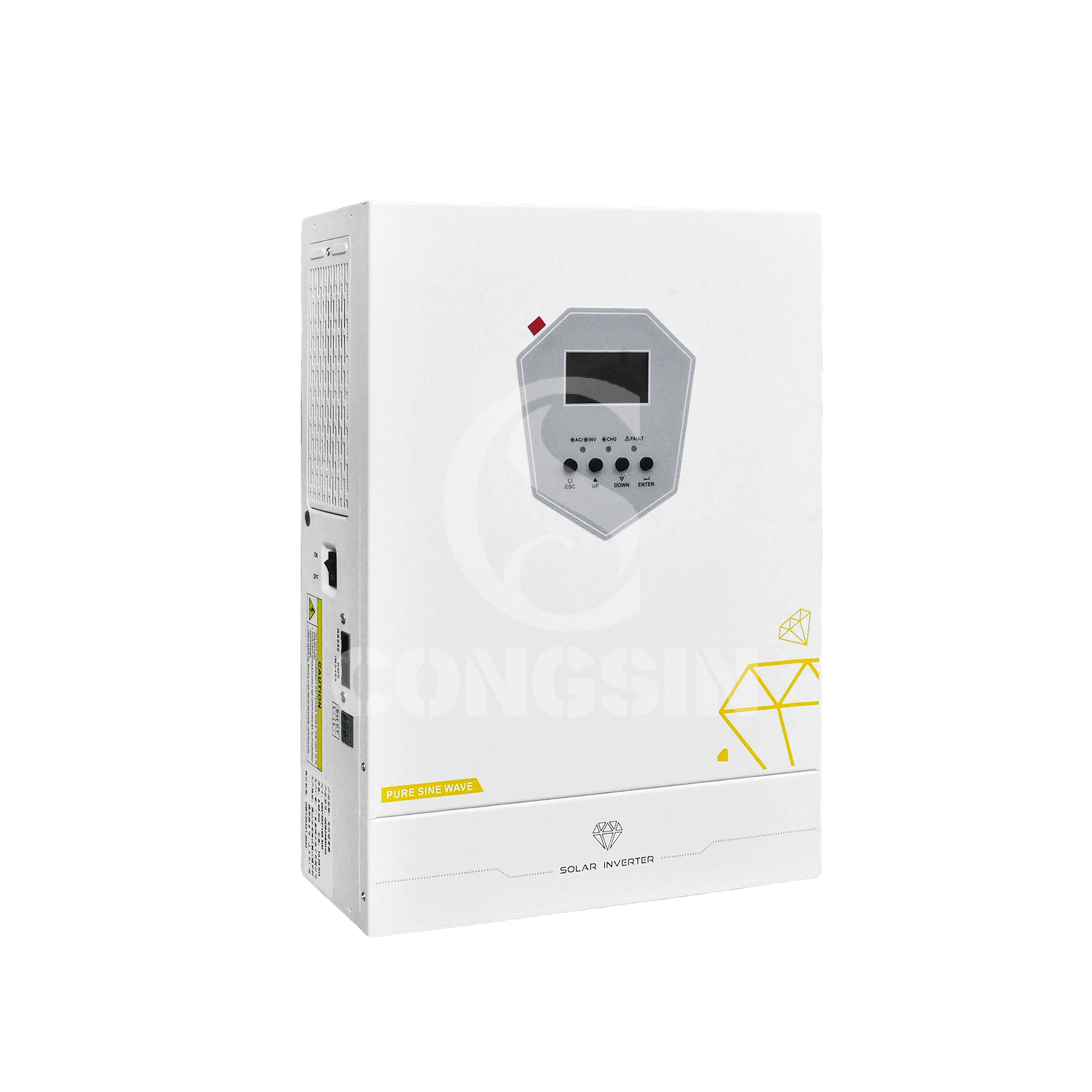
Factory Direct Sales 6000W Hybrid Solar Power Inverter with Controller and LCD Display
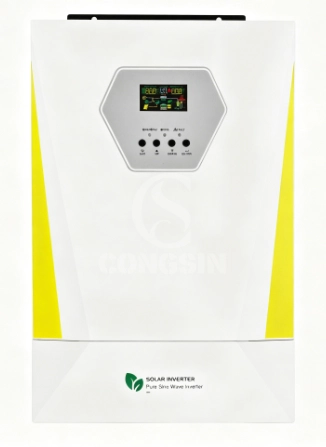
Congsin 4000W and 6000W Hybrid Inverter with Controller with LCD Display and CE Certification Solar
Power your solar system efficiently with the Congsin 4000W and 6000W Hybrid Inverter. Featuring an integrated MPPT Controller, this CE Certified inverter ensures optimal energy conversion. Monitor performance effortlessly via the intuitive LCD Display. Reliable, powerful, and ready for your sustainable energy needs.
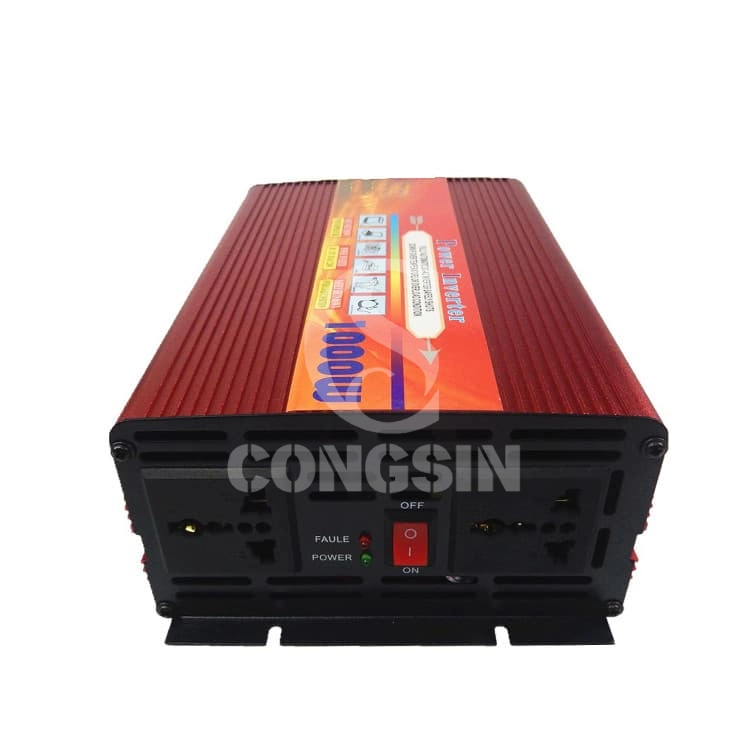
Congsin Manufacturer Wholesales Big Capability Modified Sine Wave Inverter with Red case and Double fan
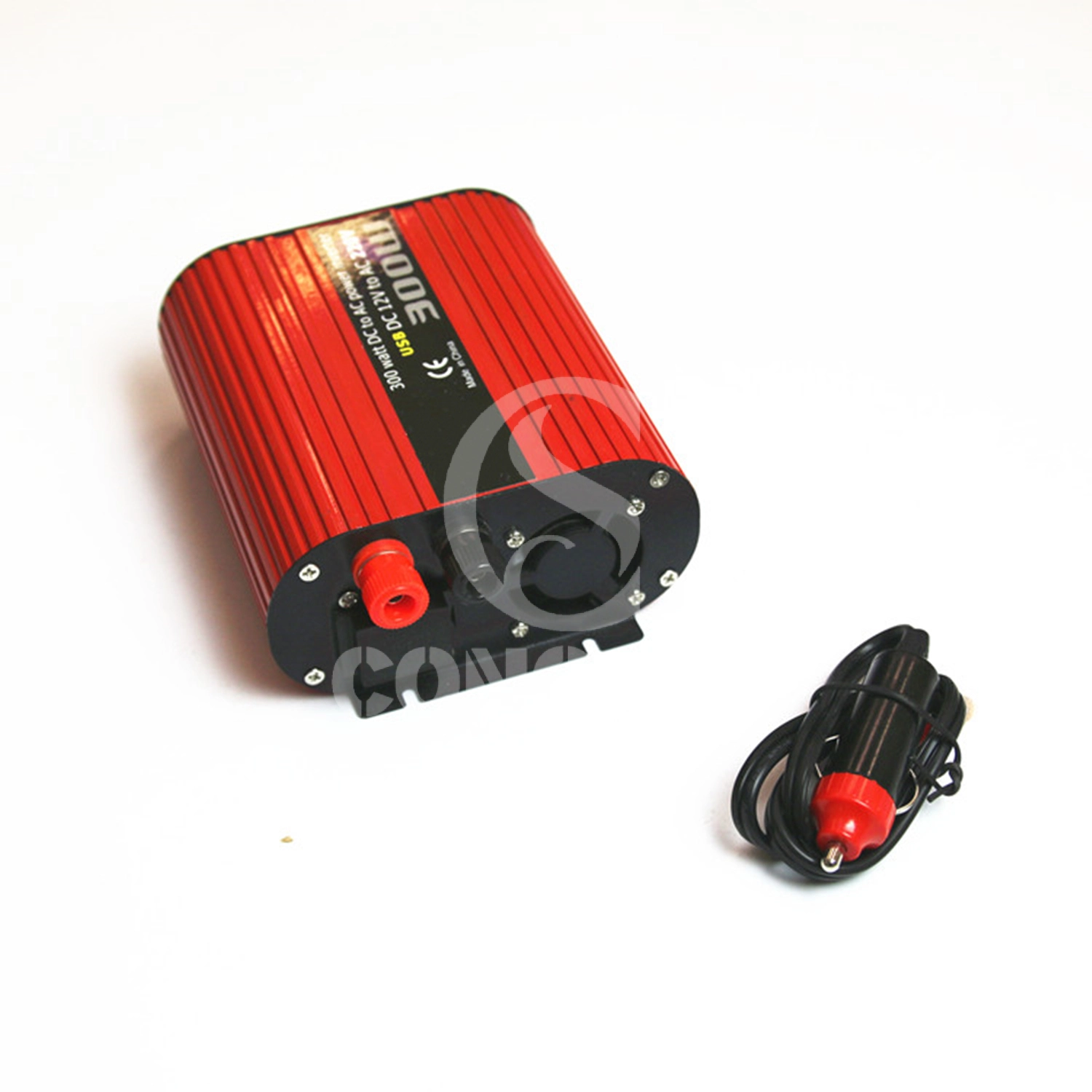
Factory Direct Sales Portable 150W Modified Sine Wave Inverter DC12V to AC220V Off-grid Sine Wave Inverter with Two USB and Universal Socket
Congsin's Portable 150W Modified Sine Wave Inverter powers your journey! This versatile Car Power Inverter with USB acts as a reliable 12V to 220V converter, ensuring an essential off-grid power supply. With dual USB ports and a universal socket, enjoy convenient power on the go.

CONGSIN is a trusted OEM factory for power inverters, solar charge controllers, and DC converters. Reliable solutions for global B2B buyers.
 High Quality
 7/24 Service
 Guaranteed Warranty
© 2025 Congsin. All Rights Reserved.
 WeChat
 Scan QR Code
sin cong
teaimei10
Whatsapp: +8618028086791
Scan QR Code